
Systemic Sclerosis or Scleroderma
Systemic Sclerosis or Scleroderma
Systemic Sclerosis or Scleroderma: Symptoms, Diagnosis and Treatment
Systemic sclerosis, also called scleroderma, is a rare autoimmune connective tissue disease characterised by blood-vessel abnormalities, immune-system activation and excess collagen deposition. It can cause skin thickening and may affect the lungs, digestive tract, heart and kidneys. The disease has different forms and patterns, so assessment needs to consider both skin and internal organ involvement. If you are researching systemic sclerosis or scleroderma treatment in dwarka, it is useful to understand how the condition is assessed, which treatment approaches may be considered and why follow-up is important. Medical care should be based on an individual's symptoms, examination findings, test results, other health conditions and preferences. Information on this page is educational and cannot replace an in-person assessment or an individual treatment plan.
What Is Systemic Sclerosis or Scleroderma?
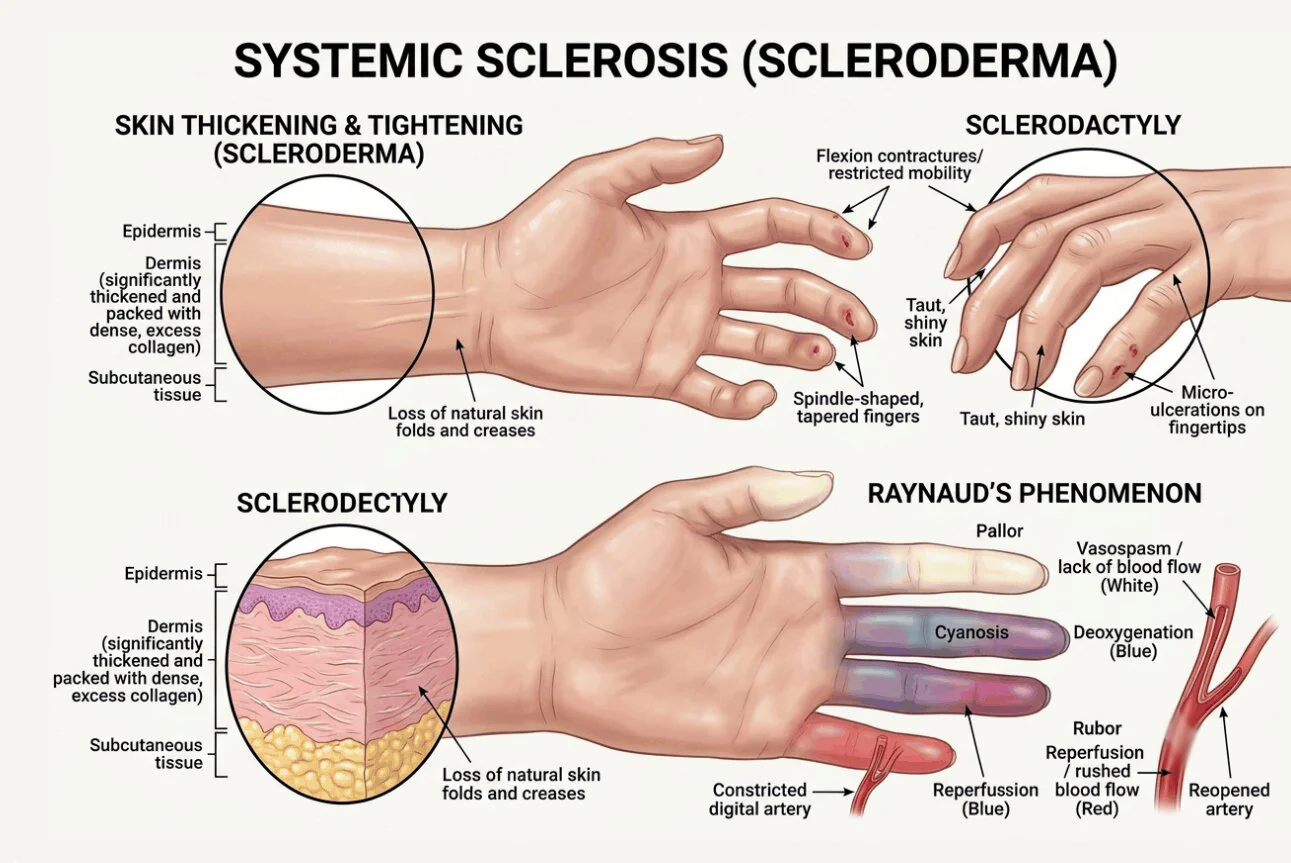
Systemic sclerosis, also called scleroderma, is a rare autoimmune connective tissue disease characterised by blood-vessel abnormalities, immune-system activation and excess collagen deposition. It can cause skin thickening and may affect the lungs, digestive tract, heart and kidneys. The disease has different forms and patterns, so assessment needs to consider both skin and internal organ involvement. The name describes a specific disease pattern, but the way it affects each person can be different. Some people have symptoms limited mainly to one organ system, while others develop features involving several parts of the body. Disease activity may change over time. A clinician considers the pattern, duration and severity of symptoms rather than making a decision from one symptom or laboratory result.
Common Symptoms and Warning Signs
Symptoms associated with systemic sclerosis or scleroderma may include Raynaud phenomenon, fingers becoming white or blue in cold conditions, puffy fingers, skin tightening, fingertip ulcers, reflux, swallowing difficulty, breathlessness and reduced exercise tolerance. Some people develop visible changes in skin texture, pigmentation or facial tightness.. The presence of one or more of these features does not automatically confirm the condition. Similar symptoms can occur in other illnesses, and the pattern over time is often important.
Possible Causes and Risk Factors
The causes of systemic sclerosis or scleroderma are not always fully understood. Current medical knowledge points to the precise cause is unknown. Genetic susceptibility, environmental exposures and abnormal immune and vascular responses are thought to contribute. Systemic sclerosis is not contagious. The condition is different from localised scleroderma, which generally does not involve internal organs in the same way. Risk factors are not the same as a definite cause: many people with a recognised risk factor never develop the disease, and some people develop it without an obvious risk factor. A clinician may ask about family history, medicines, previous illnesses, environmental exposures and other autoimmune symptoms to understand the broader context.
How Is the Condition Diagnosed?
Assessment for systemic sclerosis or scleroderma may include clinical examination, nailfold capillaroscopy, autoantibody testing, lung function tests, high-resolution chest CT when indicated, echocardiography, kidney function and blood pressure monitoring. Tests are selected according to symptoms and disease subtype. Screening for lung and pulmonary vascular complications may be important even before symptoms appear. The exact investigations depend on the symptoms and organs that may be involved. Not every person needs every test. Results must be interpreted alongside the clinical examination, because isolated abnormalities can occur for reasons unrelated to the suspected disease.
Treatment Options for Systemic Sclerosis or Scleroderma
Treatment for systemic sclerosis or scleroderma is individualised. Depending on the diagnosis and severity, approaches may include there is no single treatment for all aspects of systemic sclerosis. Management targets the affected organ: vasodilators for Raynaud symptoms, medicines for reflux, immunomodulatory therapy for selected skin or lung disease, and specific treatments for pulmonary arterial hypertension when diagnosed. Kidney crisis requires urgent specialist management. Care is often multidisciplinary. The goal may be to reduce inflammation, control symptoms, prevent organ damage, preserve function or manage complications. Not every treatment is suitable for every patient, and some medicines require blood tests, infection screening or other safety checks before and during use.
Lifestyle and Long-Term Management
Supportive measures for people living with systemic sclerosis or scleroderma may include keeping warm, avoiding smoking, protecting fingers from injury, gentle hand and joint exercises, oral and dental care, smaller meals for reflux, and regular monitoring. People should discuss pregnancy planning and medicine safety with specialists. Sudden severe blood pressure elevation or reduced urine output requires urgent care. These measures complement, rather than replace, medical treatment when treatment is indicated. The right level of activity, dietary changes and monitoring will depend on the person's health and the organs involved.
Possible Complications
Potential complications of systemic sclerosis or scleroderma include interstitial lung disease, pulmonary arterial hypertension, digital ulcers, gastrointestinal complications, heart involvement and scleroderma renal crisis. The risk varies by subtype and antibody profile. Routine organ screening is an important part of follow-up. Complications are not inevitable, and their likelihood depends on the disease subtype, duration, activity, co-existing conditions and response to treatment. Monitoring is intended to identify changes early and to balance disease control against possible medicine-related effects.
When Should You Seek Medical Advice?
Medical evaluation is appropriate for new breathlessness, chest pain, fainting, rapidly rising blood pressure, severe headache, reduced urine output or rapidly worsening finger ulcers. Sudden severe hypertension in systemic sclerosis is an emergency. Anyone with a known diagnosis should follow the monitoring schedule advised by their clinician, even when symptoms are stable. New symptoms should be discussed rather than assumed to be part of the existing condition. Severe or rapidly worsening symptoms may require urgent or emergency assessment.
Conclusion
Systemic Sclerosis or Scleroderma can affect people in different ways, so assessment and management need to be tailored to the individual. Understanding the symptoms, diagnostic process, treatment choices and possible complications can help patients take part in informed discussions about their care. Regular follow-up, appropriate investigations and a plan that reflects disease activity are important parts of long-term management. The information in this article is general and should be discussed with a qualified healthcare professional in the context of an individual's circumstances.
Frequently Asked Questions (FAQs)
What is systemic sclerosis or scleroderma?
Systemic sclerosis, also called scleroderma, is a rare autoimmune connective tissue disease characterised by blood-vessel abnormalities, immune-system activation and excess collagen deposition. It can cause skin thickening and may affect the lungs, digestive tract, heart and kidneys. The disease has different forms and patterns, so assessment needs to consider both skin and internal organ involvement. The exact features and severity vary, so assessment is based on the individual's clinical history, examination and relevant investigations.
What are common symptoms?
Symptoms may include Raynaud phenomenon, fingers becoming white or blue in cold conditions, puffy fingers, skin tightening, fingertip ulcers, reflux, swallowing difficulty, breathlessness and reduced exercise tolerance. Some people develop visible changes in skin texture, pigmentation or facial tightness. Similar features can occur in other conditions, so persistent or unexplained symptoms should be medically assessed.
How is the condition diagnosed?
Assessment may include clinical examination, nailfold capillaroscopy, autoantibody testing, lung function tests, high-resolution chest CT when indicated, echocardiography, kidney function and blood pressure monitoring. Tests are selected according to symptoms and disease subtype. Screening for lung and pulmonary vascular complications may be important even before symptoms appear. No single result should generally be interpreted in isolation; the findings are considered alongside symptoms and examination.
What treatments may be used?
Depending on severity and the organs involved, treatment may include there is no single treatment for all aspects of systemic sclerosis. Management targets the affected organ: vasodilators for Raynaud symptoms, medicines for reflux, immunomodulatory therapy for selected skin or lung disease, and specific treatments for pulmonary arterial hypertension when diagnosed. Kidney crisis requires urgent specialist management. Care is often multidisciplinary. The appropriate plan is individualised and requires medical supervision.
Can lifestyle changes replace medical treatment?
Lifestyle measures may support general health and symptom management, but they do not replace prescribed treatment when a clinician considers disease-modifying or organ-protective therapy necessary.
When should someone seek urgent medical care?
Seek prompt assessment for new breathlessness, chest pain, fainting, rapidly rising blood pressure, severe headache, reduced urine output or rapidly worsening finger ulcers. Sudden severe hypertension in systemic sclerosis is an emergency. If symptoms are severe, sudden or rapidly worsening, use local emergency services.


